
Como proveedor de servicios para marcas de trajes de baño, entendemos el papel fundamental que juega la selección de telas en la definición de la identidad de la marca, el rendimiento del producto y la competitividad del mercado. Entre la miríada de telas para trajes de baño, el nailon y el poliéster son, sin duda, los dos pilares. Sus propiedades únicas determinan los tipos de trajes de baño más adecuados y el público objetivo. Este artículo proporciona una comparación en profundidad de estas dos telas, con el objetivo de ayudar a las marcas de trajes de baño a tomar decisiones precisas para crear productos de alta calidad que se alineen con el espíritu de su marca y las demandas de los consumidores.
¿Es esta página para usted?
Para marcas de trajes de baño, mayoristas y clientes personalizados: Esta es su guía completa de decisión de telas B2B. Profundizaremos en las consideraciones de producción, los conocimientos sobre la fabricación a granel y cómo la elección de la tela impacta en su rentabilidad.
Para consumidores individuales: Si solo busca comprar un traje de baño para usted, aquí tiene un resumen rápido: elija nailon para una comodidad suave y lujosa en la playa, y elija poliéster si nada con frecuencia en piscinas con cloro y necesita la máxima durabilidad.
Diferencias clave a simple vista
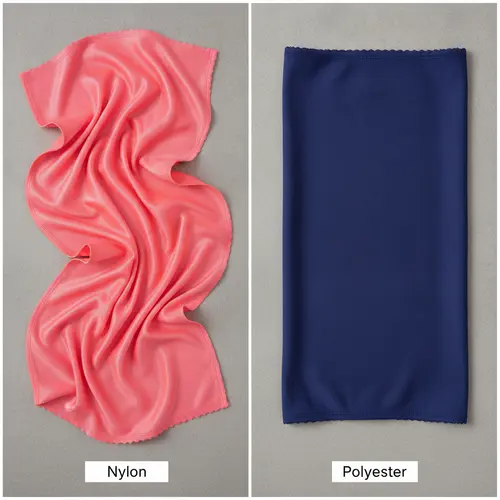
El nailon es conocido por su suavidad excepcional, tacto agradable para la piel y elasticidad, lo que lo hace ideal para marcas de trajes de baño que priorizan la comodidad, el diseño vanguardista y la ropa casual. Imagine que su marca se posiciona como "estilo de resort de playa" o "trajes de baño de alta gama"; el nailon puede aportar un toque lujoso y líneas fluidas a sus trajes de baño. Sin embargo, el nailon es relativamente débil en resistencia al cloro y a los rayos UV, y el uso prolongado o el contacto frecuente con el agua de la piscina pueden provocar decoloración y pérdida de elasticidad.
En contraste, el poliéster destaca por su excepcional durabilidad, resistencia al cloro, resistencia a los rayos UV y estabilidad del color, lo que lo convierte en la elección perfecta para marcas orientadas al rendimiento. Si su marca se enfoca en "trajes de baño de competición profesionales", "trajes de baño para entrenamiento de alta intensidad" o "trajes de baño para niños", el poliéster asegura que los trajes de baño conserven su forma y color incluso en condiciones difíciles. La desventaja del poliéster es que su tacto puede no ser tan suave como el del nailon, y su elasticidad es ligeramente inferior, aunque los procesos de fabricación modernos han mejorado significativamente esto.
Nailon: El epítome de la comodidad y el estilo
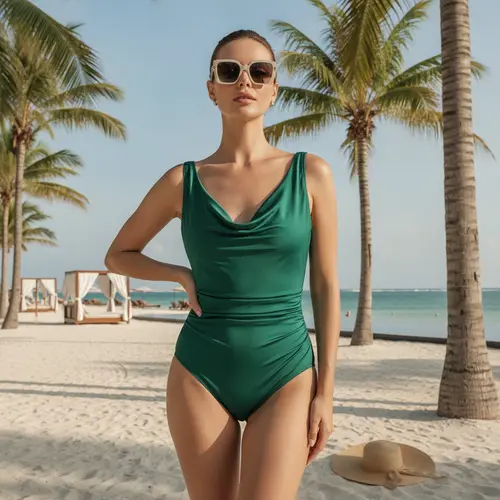
El nailon, también conocido como poliamida, es una tela históricamente popular y ampliamente utilizada en la industria de los trajes de baño. Su estructura de fibra única le confiere una serie de excelentes propiedades, lo que lo convierte en la opción preferida para muchas marcas de trajes de baño de moda y casuales.
Características clave:
•Suavidad y agradable para la piel: Las fibras de nailon tienen un tacto excepcionalmente suave y liso, proporcionando una comodidad superior al usarlo, sintiéndose como una segunda piel. Esto es crucial para las marcas que buscan la máxima experiencia de uso.
•Excelente elasticidad y recuperación: El nailon posee una buena elasticidad y a menudo se mezcla con una pequeña cantidad de Spandex (Lycra/Elastano) para mejorar aún más su estiramiento y capacidad de retención de la forma. Esto permite que los trajes de baño se adapten perfectamente a las curvas del cuerpo, proporcionando libertad de movimiento.
•Ligero y de secado rápido: La tela de nailon es ligera y fina, con una absorción de agua relativamente baja, por lo que ofrece propiedades de secado rápido, mejorando la comodidad para quienes lo usan.
•Brillo y efecto de teñido: La superficie de la tela de nailon suele tener un brillo natural y es fácil de teñir, presentando colores vibrantes y saturados, lo que la hace muy adecuada para diseños con un fuerte sentido de la moda.
Escenarios de aplicación de la marca:
•Trajes de baño de moda y casuales: El tacto suave del nailon y su buena caída lo convierten en una opción ideal para diseñar bikinis de moda, trajes de baño de una pieza y ropa de playa. Las marcas pueden aprovechar sus excelentes propiedades de teñido para lanzar productos con colores ricos y patrones diversos.
•Colecciones de resort: Para las marcas que se dirigen al mercado de resorts de alta gama, los trajes de baño de nailon pueden ofrecer una experiencia de uso lujosa, satisfaciendo las dobles demandas de los consumidores de comodidad y estética.
•Trajes de baño moldeadores: Las telas mezcladas con nailon y una alta proporción de Spandex pueden proporcionar excelentes efectos moldeadores, ayudando a las marcas a crear colecciones de trajes de baño que estilizan la figura.
Limitaciones y consideraciones para la marca:
A pesar de las importantes ventajas del nailon, su resistencia al cloro y protección UV son generalmente promedio. La exposición prolongada al agua clorada y la luz solar intensa puede provocar fácilmente la decoloración, el daño de las fibras y la pérdida de elasticidad en los trajes de baño de nailon. Por lo tanto, para las marcas de trajes de baño centradas en el uso competitivo o de alta frecuencia, el nailon puro puede no ser la opción óptima. Al seleccionar nailon, las marcas deben comunicar claramente sus escenarios de aplicación y las instrucciones de cuidado adecuadas a los consumidores para prolongar la vida útil del producto.
Para las marcas: Consideraciones de producción
Al adquirir nailon para la producción a granel, es importante tener en cuenta que el nailon premium (especialmente las variantes sostenibles) a menudo tiene un precio más alto que el poliéster estándar. Las cantidades mínimas de pedido (MOQ) para el nailon teñido a medida pueden oscilar entre 300 y 500 yardas, dependiendo del fabricante. Debido a que el nailon absorbe bien el tinte, es excelente para colores sólidos y vibrantes, pero las marcas deben asegurarse de que su socio de fabricación realice rigurosas pruebas de solidez del color para evitar que se destiña durante el primer lavado.
Poliéster: La garantía de rendimiento y durabilidad
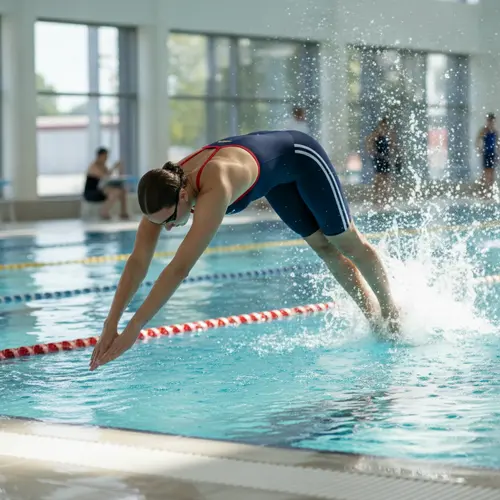
El poliéster es otra tela ampliamente utilizada en la industria de los trajes de baño, particularmente favorecida por marcas con altas exigencias de durabilidad y funcionalidad. Su estructura química le permite un rendimiento excepcionalmente bueno en entornos hostiles. Según pruebas de la industria, las mezclas de poliéster de alta calidad pueden soportar más de 300 horas de exposición continua al agua clorada sin una degradación significativa, mientras que el nailon estándar puede comenzar a degradarse después de 50-100 horas.
Características clave:
•Excelente resistencia al cloro: La resistencia del poliéster al cloro supera con creces la del nailon, lo que significa que es menos propenso a sufrir daños, decoloración o pérdida de elasticidad después del contacto frecuente con el agua de la piscina. Esto es crucial para el entrenamiento profesional y los trajes de baño de competición.
•Protección UV superior: El poliéster resiste eficazmente la radiación UV (a menudo alcanzando clasificaciones UPF 50+ de forma nativa), ayudando a proteger la piel del usuario y a mantener los colores vibrantes del traje de baño, evitando el envejecimiento debido a la exposición solar.
•Alta resistencia y durabilidad: Las fibras de poliéster son resistentes y resistentes a la abrasión, lo que confiere a los trajes de baño de poliéster una vida útil más larga, manteniendo un buen estado incluso con un uso de alta intensidad.
•Retención de la forma: La tela de poliéster no se deforma fácilmente; recupera rápidamente su forma original incluso después de estiramientos repetidos, asegurando el ajuste del traje de baño.
•Secado rápido: El poliéster tiene baja absorción de agua y se seca rápidamente, lo que mejora la comodidad de uso.
•Capacidad de impresión: El poliéster es muy adecuado para la impresión digital por sublimación, capaz de producir patrones claros y vívidos y colores ricos sin añadir peso o rigidez a la tela.
Escenarios de aplicación de la marca:
•Trajes de baño de competición y entrenamiento: Para atletas profesionales o consumidores que nadan con frecuencia, los trajes de baño de poliéster son la mejor opción. Las marcas pueden enfatizar su resistencia al cloro, durabilidad y propiedades de retención de forma para satisfacer las demandas de alto rendimiento.
•Trajes de baño para niños: Los trajes de baño para niños deben soportar lavados y juegos frecuentes. La durabilidad y las propiedades de fácil cuidado del poliéster lo convierten en una tela ideal para trajes de baño infantiles, extendiendo eficazmente la vida útil del producto.
•Trajes de baño para deportes acuáticos al aire libre: Los deportes acuáticos al aire libre como el surf y el paddleboarding requieren una alta resistencia a los rayos UV y a la abrasión de los trajes de baño. El poliéster proporciona una protección fiable.
•Colecciones ecológicas (Poliéster reciclado): Con la creciente concienciación sobre la sostenibilidad, el poliéster reciclado (por ejemplo, REPREVE®) se ha convertido en la elección de un número cada vez mayor de marcas. Conserva las excelentes propiedades del poliéster virgen al tiempo que reduce el impacto ambiental.
Limitaciones y consideraciones para la marca:
En comparación con el nailon, la tela de poliéster puro puede sentirse ligeramente más áspera y menos suave. Su elasticidad también es algo inferior a la del nailon. Sin embargo, la tecnología textil moderna y los procesos de mezcla están mejorando continuamente estos aspectos. Al elegir poliéster, las marcas pueden considerar mezclarlo con una mayor cantidad de Spandex para mejorar la comodidad y la elasticidad, manteniendo las ventajas principales del poliéster.
Para las marcas: Consideraciones de producción
El poliéster es generalmente más rentable que el nailon, lo que lo convierte en una excelente opción para marcas en crecimiento. Es el campeón indiscutible para estampados complejos y multicolores porque soporta la impresión digital por sublimación, un proceso que permite diseños fotorrealistas con cero desperdicio de agua y, a menudo, MOQs más bajos (a veces tan bajos como 50-100 piezas por estampado).
Nailon vs. Poliéster: Tabla comparativa de decisiones de marca
Para ayudar de manera más intuitiva a las marcas de trajes de baño en la selección de telas, la siguiente tabla resume las características clave del nailon y el poliéster en aplicaciones de trajes de baño:
| Característica | Nailon | Poliéster | Consejo de estrategia de marca | Complejidad de producción |
|---|---|---|---|---|
| Tacto | Extremadamente suave, liso, agradable para la piel | Suave, pero potencialmente ligeramente menos que el nailon | Elija nailon para una comodidad lujosa; poliéster para rendimiento | Baja |
| Elasticidad | Excelente, a menudo mezclado con spandex | Buena, pero ligeramente inferior al nailon | Enfatice el ajuste con nailon; la retención de la forma con poliéster | Media (Requiere una mezcla precisa de spandex) |
| Resistencia al cloro | Pobre, se daña fácilmente, se decolora | Excelente, altamente resistente al cloro | La moda casual elige nailon; el entrenamiento competitivo elige poliéster | Baja |
| Resistencia UV | General, se envejece fácilmente con el sol | Excelente, resiste eficazmente la radiación UV | El uso diario elige nailon; los deportes al aire libre eligen poliéster | Baja |
| Durabilidad | Buena, pero el cloro a largo plazo la reduce | Excelente, alta resistencia, resistente a la abrasión | Ciclo de moda corto elige nailon; larga duración elige poliéster | Baja |
| Teñido y estampado | Fácil de teñir, colores sólidos vibrantes | Excelente para impresión digital por sublimación | Colores sólidos eligen nailon; patrones complejos eligen poliéster | Nailon: Media (pruebas de solidez del color); Poliéster: Baja (la sublimación es muy fiable) |
| Opciones ecológicas | Nailon reciclado (por ejemplo, ECONYL®) | Poliéster reciclado (por ejemplo, REPREVE®) | Ambos tienen opciones sostenibles | Media (Requiere abastecimiento certificado) |
Hable con nuestro especialista en telas sobre cuál es el adecuado para su próxima colección.
El papel del Spandex (Lycra/Elastano): La fuente de elasticidad
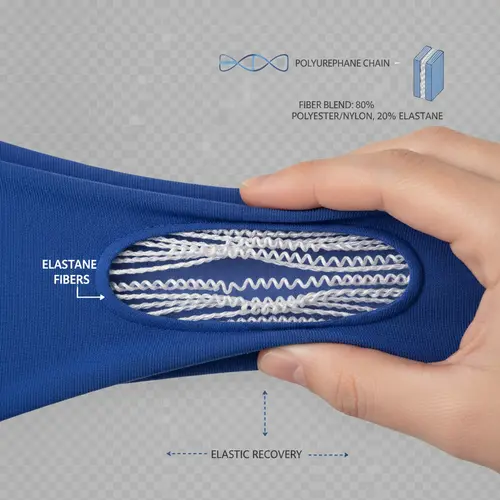
El Spandex (a menudo llamado Elastano en Europa, siendo LYCRA® una marca conocida) no es una tela principal para trajes de baño. En cambio, sirve como una fibra elástica, mezclada con nailon o poliéster para dotar a los trajes de baño de una excelente elasticidad y recuperación. Su función principal es asegurar que el traje de baño se ajuste cómodamente, proporcione una experiencia de uso confortable y libertad de movimiento, y ayude a que el traje de baño recupere rápidamente su forma original después de estirarse, manteniendo su estructura.
•Proporción de mezcla: El contenido de Spandex en los trajes de baño suele oscilar entre el 10% y el 30%. Una mayor proporción de Spandex significa una mejor elasticidad y efectos moldeadores, pero también aumenta los costos.
•Consideraciones de la marca: Al elegir Spandex, las marcas deben prestar atención a su calidad y resistencia al cloro. El Spandex de alta calidad (como LYCRA® XTRA LIFE™) puede resistir eficazmente la erosión del agua clorada y los protectores solares, prolongando la vida útil del traje de baño.
Telas ecológicas: Una oportunidad de marca sostenible
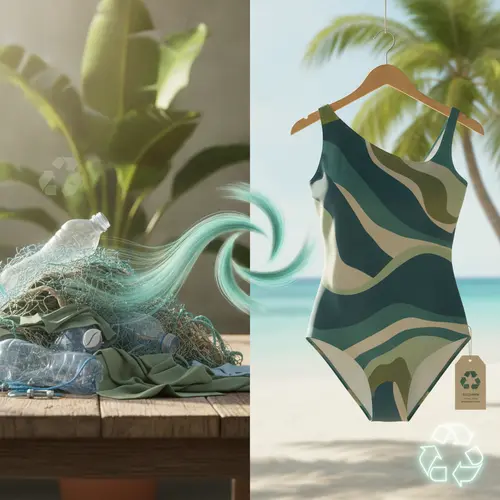
En el entorno actual del mercado, la preocupación de los consumidores por la sostenibilidad está creciendo. Las marcas de trajes de baño pueden aprovechar las telas ecológicas, como el nailon reciclado y el poliéster reciclado, para mejorar la imagen de marca y la competitividad del mercado.
•Nailon reciclado (por ejemplo, ECONYL®): Normalmente fabricado a partir de residuos de nailon reciclado, como redes de pesca y restos de alfombras desechadas. Conserva la suavidad, elasticidad y comodidad del nailon virgen, al tiempo que reduce el impacto ambiental. Adecuado para marcas de moda que buscan una imagen ecológica de alta gama.
•Poliéster reciclado (por ejemplo, REPREVE®): Principalmente fabricado a partir de botellas de plástico recicladas. Hereda las características de durabilidad, resistencia al cloro y protección UV del poliéster virgen, lo que lo convierte en una opción ideal para trajes de baño ecológicos orientados al rendimiento.
¿Cómo elegir la mejor tela de traje de baño para su marca?
Elegir la tela de traje de baño más adecuada para su marca requiere una consideración integral del posicionamiento de la marca, los clientes objetivo, el uso del producto y el presupuesto. Aquí hay algunos factores clave para la toma de decisiones:
1.Defina los valores fundamentales de su marca: ¿Su marca enfatiza la comodidad lujosa, el diseño vanguardista o el alto rendimiento y la durabilidad extrema? Si es lo primero, el nailon y sus mezclas son ideales; si es lo último, el poliéster y sus mezclas serán su primera elección.
2.Comprenda las necesidades del cliente objetivo: ¿Sus clientes son veraneantes ocasionales, seguidores de tendencias de moda o nadadores profesionales y entusiastas de los deportes acuáticos? Los diferentes grupos tienen demandas muy diferentes en cuanto al rendimiento de la tela del traje de baño.
3.Considere los escenarios de uso del producto: ¿El traje de baño es principalmente para piscinas cubiertas, vacaciones en la playa, entrenamiento profesional o deportes acuáticos al aire libre? Los diferentes entornos tienen requisitos variados de resistencia al cloro, protección UV y durabilidad.
4.Equilibre el costo y el rendimiento: Puede haber diferencias en el costo entre el nailon y el poliéster, y las telas mezcladas de alta calidad y las telas ecológicas también afectarán el costo. Las marcas deben encontrar el equilibrio óptimo entre rendimiento, calidad y precio.
De la elección de la tela a la producción a granel: Lo que las marcas deben saber
Seleccionar la tela es solo el primer paso. Pasar de una muestra de tela a la producción a granel implica varias consideraciones críticas B2B:
•Cantidades mínimas de pedido (MOQ): Comprenda el MOQ de su fabricante por tela y por color. El teñido personalizado de nailon generalmente requiere MOQs más altos que la impresión digital en poliéster.
•Riesgos de abastecimiento y plazos de entrega: Las telas sostenibles como ECONYL® o REPREVE® requieren cadenas de suministro certificadas. Asegúrese de que su socio de fabricación tenga acceso directo a estas fábricas para evitar retrasos. Los plazos de entrega para telas especializadas pueden añadir de 2 a 4 semanas a su calendario de producción.
•Prototipos y pruebas de ajuste: El nailon y el poliéster tienen caídas y elasticidades diferentes. Un patrón diseñado para una mezcla de nailon y spandex puede necesitar ajustes si cambia a una mezcla de poliéster y spandex. Siempre solicite muestras de preproducción (PPS) para verificar el ajuste y el comportamiento de la tela.
•Calificación del proveedor: Asegúrese de que su socio OEM realice un control de calidad riguroso, incluyendo pruebas de solidez del color (especialmente para nailon neón u oscuro) y pruebas de recuperación de estiramiento.
Siguiente paso para las marcas de trajes de baño
¿Listo para dar vida a sus diseños de trajes de baño? Ya sea que necesite el toque lujoso del nailon reciclado premium o el rendimiento indestructible del poliéster impreso por sublimación, asociarse con un fabricante experimentado es clave. Contacte a nuestro equipo de producción hoy mismo para solicitar muestras de tela y discutir la mejor estrategia de materiales para su próxima colección.
Conclusión
Cuando se trata de la selección de telas para trajes de baño, el nailon y el poliéster tienen cada uno sus méritos; no se trata de cuál es superior, sino de cuál es "más adecuado". Como proveedor de servicios de marcas de trajes de baño, recomendamos que las marcas comprendan profundamente las características de estas dos telas y tomen las decisiones más informadas basándose en su posicionamiento de marca y estrategia de mercado. Ya sea que busque la máxima comodidad y moda con el nailon, se centre en el excelente rendimiento y la durabilidad con el poliéster, o adopte telas recicladas ecológicas, la selección precisa de la tela será un paso crucial hacia el éxito de su marca.
Preguntas Frecuentes sobre Telas para Trajes de Baño (FAQ)
P1: ¿Debo elegir nailon o poliéster para mi línea de trajes de baño de marca propia?
R1: Depende completamente del posicionamiento de su marca. Si su marca propia se enfoca en ropa de resort de lujo, bikinis de alta costura o trajes de baño moldeadores, el nailon es la mejor opción por su caída suave y su tacto premium. Si va a lanzar una línea de ropa deportiva, surf o infantil, el poliéster es muy recomendable por su durabilidad y resistencia a los rayos UV/cloro.
P2: ¿El poliéster reciclado cumple con los requisitos de rendimiento para trajes de baño de competición?
R2: Sí, absolutamente. El poliéster reciclado de alta calidad (como REPREVE®) ofrece exactamente el mismo rendimiento molecular que el poliéster virgen. Proporciona una resistencia excepcional al cloro, retención de la forma y protección UV, lo que lo hace totalmente capaz de satisfacer las rigurosas demandas de los trajes de baño de competición, al tiempo que ofrece una sólida narrativa de sostenibilidad.
P3: ¿Qué es más cómodo, un traje de baño de nailon o de poliéster?
R3: Generalmente, los trajes de baño de nailon son más cómodos debido a su tacto suave y liso. El poliéster puede ser ligeramente inferior en tacto, pero los procesos de fabricación modernos han mejorado significativamente la suavidad del poliéster.
P4: ¿Qué tela es más resistente al cloro para trajes de baño?
R4: Los trajes de baño de poliéster tienen una excelente resistencia al cloro, superando con creces al nailon. Por lo tanto, para trajes de baño usados frecuentemente en piscinas cloradas, el poliéster es la opción más duradera.
P5: ¿Cuál es el papel del Spandex en los trajes de baño?
R5: El Spandex no es una tela principal para trajes de baño, sino que sirve como una fibra elástica mezclada con nailon o poliéster para proporcionar a los trajes de baño una excelente elasticidad y recuperación, asegurando un ajuste ceñido y un uso cómodo.